The Gardeners’ Dish
mythic quest for dinner during spring’s final act.
Written By: Laura DeFeo
The gatherer returned from his expedition late in the evening. During his travels, he wandered many fields, finding a verdant array of spring greenery at every turn. Exhausted, yet still pondering his findings, the quest led naturally to the quest-ion: What is to be done to honor these gifts so abundantly bestowed upon the land?
He reflected on the fleeting presence of visitors like asparagus and snap peas alongside the more steadfast scallions and lacinato kale. How, exactly, might he make the most of this transient moment in the waning days of spring?
Hurriedly, he consulted his bookshelf, replete with tomes of culinary knowledge. Something here will have the answer. One of these thousands of pages will yield the key and make sense of this once-in-a-season convergence.
Just then, as the lamplight flickered, his eyes fell upon Six Seasons: A New Way with Vegetables by Joshua McFadden.
This. THIS will have the wisdom that I seek.
And there, on page 81, he found not merely a recipe, but a tradition: Vignole (Vignarola), the Roman Gardener's Dish.
Vignole is more commonly referred to as Vignarola, which translates roughly to "the vineyard workers' dish" or "the gardeners' dish." My research for this newsletter yielded mixed results as to its origin. Some sources connect the dish to the vineyards surrounding Rome, where it was traditionally prepared with spring vegetables gathered by vineyard workers tending the vines ("vigne"). Other sources suggest that it is named after the vignaroli, a Roman term for market gardeners, who would make the dish from unsold spring produce at the end of the market day.
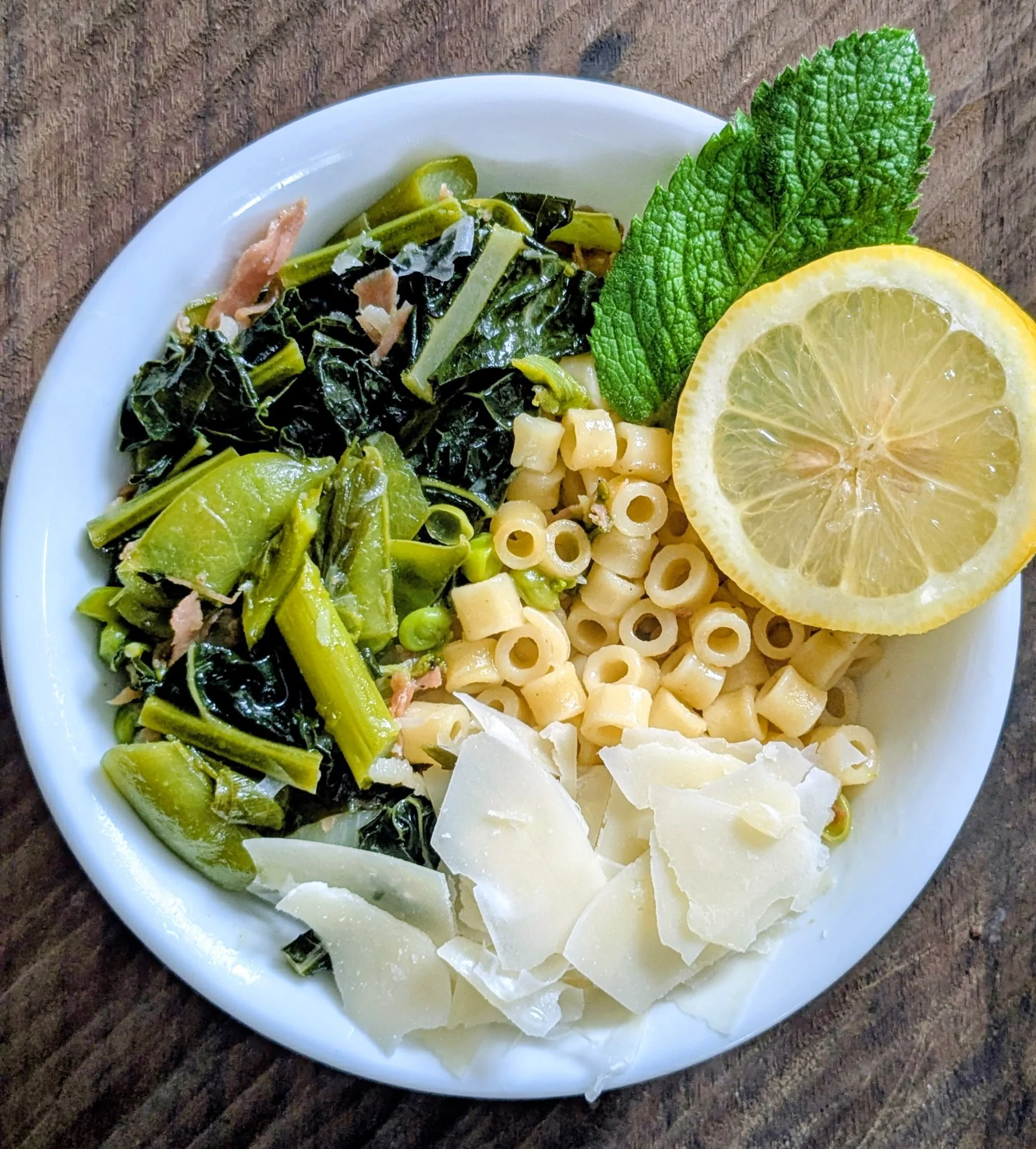
We made some adjustments to both the traditional version and McFadden's version to match our current harvest, and we were delighted with the results! The vegetables in this dish felt like a celebration of spring, while the prosciutto, chicken broth, and lemon zest added extra depth of flavor. Check out our version of the recipe below... and the thrilling conclusion of our hero's journey!
Recipe: Vignarola
Ingredients:
48 oz. chicken broth
1 package ditalini pasta
2 cups scallions, sliced into 1-inch pieces
5 slices thin prosciutto, chopped into small pieces
2 bulbs spring garlic (or 2 cloves regular garlic), sliced
¼ cup olive oil
Salt and black pepper
2 cups sugar snap peas, trimmed and cut into ½-inch pieces
1 cup asparagus, trimmed and cut at an angle into ½-inch pieces (broccoli could substitute or even left over turnips or kohlrabi)
5 leaves lacinato (dinosaur) kale (substitute: with any green even radish, beet, turnip greens)
Zest of ½ lemon
¼ cup mint leaves or dill, minced (optional)
Shaved or shredded Parmesan cheese (optional)
Instructions:
We chose to cook the pasta in chicken broth instead of water. Bring the chicken broth to a boil and cook the pasta according to package directions. (Add water if needed to ensure there is enough liquid to cook the pasta.) Reserve 1½ cups of broth from the cooked pasta before draining.
Heat the olive oil in a pot over medium heat. Add the scallions, prosciutto, and spring garlic and season with salt and black pepper. Reduce the heat to low and cook for approximately 12–15 minutes, until the onions are softened but not browned.
Add the snap peas, asparagus, and reserved broth. Cover and cook at a simmer until the vegetables are tender, approximately 15 minutes.
Add the kale and lemon zest and simmer briefly until the kale is softened.
Add the mint or dill (if desired) and stir to combine.
Serve the stewed vegetables and broth over the pasta, adding lemon juice and/or Parmesan cheese if desired.
And so the gatherer's quest came to an end. The wisdom of the ages had been uncovered. The seasonal convergence had been honored. The bounty of the fields had been transformed into a worthy feast.
And, perhaps most importantly, it also made really good leftovers.